
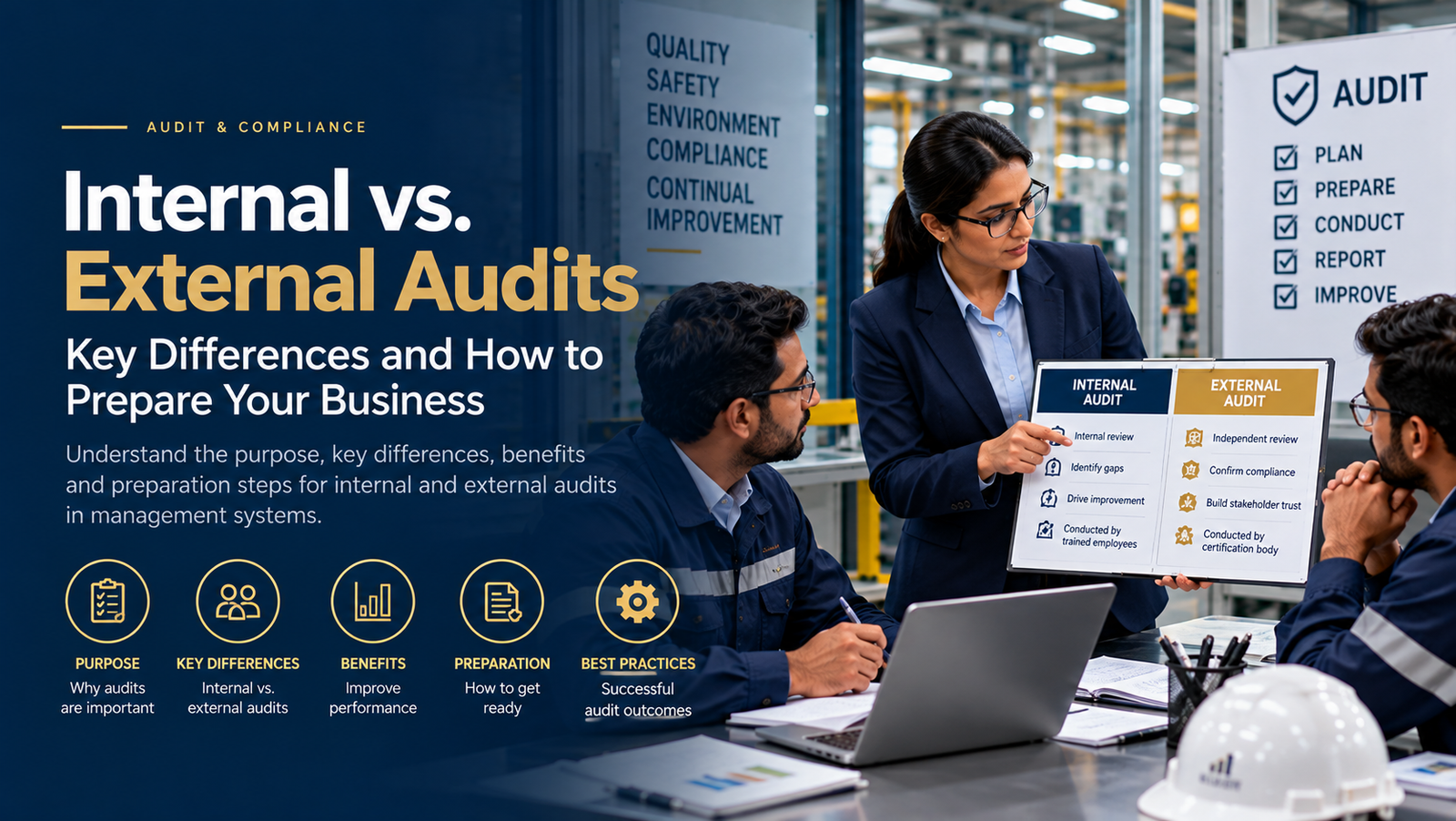
Audits play an important role in helping organisations evaluate their processes, identify weaknesses and maintain effective management systems. Whether a business operates in manufacturing, healthcare, construction or professional services, regular audits can support better control and performance.
Two important types of audits are internal audits and external audits. Although both involve reviewing processes and checking evidence, they differ in purpose, independence, responsibility and outcomes.
Understanding these differences helps businesses prepare for audits, improve compliance and build confidence in their management systems.
1. What Is an Audit?
An audit is a systematic, independent and documented process for obtaining evidence and evaluating it objectively against defined audit criteria.
In management systems, audits help determine whether activities, processes and documented arrangements meet applicable requirements and are effectively implemented.
Audit findings can highlight conformity, nonconformities and opportunities for improvement. They help management understand how well the organisation's processes are working.
2. What Is an Internal Audit?
An internal audit, also known as a first-party audit, is conducted by or on behalf of the organisation to evaluate its own management system and processes.
Internal audits help businesses check whether their procedures are followed, identify gaps, evaluate process effectiveness and prepare for external assessments.
Key Objectives of Internal Audits
- Evaluate conformity with internal procedures and applicable standards.
- Identify process gaps and nonconformities.
- Check whether documented procedures are implemented effectively.
- Identify risks and opportunities for improvement.
- Monitor the effectiveness of corrective actions.
- Provide useful information for management review.
Who Conducts Internal Audits?
Internal audits may be conducted by trained employees or qualified internal auditors. Organisations may also appoint competent external professionals to perform internal audits on their behalf.
Auditors should be objective and impartial. Wherever possible, they should not audit their own work or activities for which they are directly responsible.
3. What Is an External Audit?
An external audit is conducted by an independent organisation or auditor who is not part of the organisation being audited.
In management systems, external audits may be conducted by certification bodies, customers or other relevant parties, depending on the audit's purpose.
Key Objectives of External Audits
- Independently assess conformity with specified requirements.
- Evaluate the implementation and effectiveness of management systems.
- Verify compliance with customer or contractual requirements.
- Support certification decisions where applicable.
- Provide independent assurance to relevant stakeholders.
Common Types of External Audits
Customer Audit
Conducted by a customer or its representative to evaluate a supplier's processes and ability to meet specified requirements.
Certification Audit
Conducted by an independent certification body to assess conformity with a recognised management system standard.
Regulatory or Compliance Audit
Evaluates whether relevant legal, regulatory or other specified obligations are being met.
Financial External Audit
Independently examines financial statements under applicable accounting and auditing requirements.
4. Internal Audit vs. External Audit: Key Differences
Both types of audits are important, but their roles are different. The following comparison explains the major differences.
| Comparison | Internal Audit | External Audit |
|---|---|---|
| Purpose | Evaluate and improve internal processes. | Provide an independent assessment against defined criteria. |
| Auditor | Trained internal auditor or appointed professional. | Independent external auditor or organisation. |
| Independence | Auditor must maintain objectivity and impartiality. | Auditor operates independently of the organisation being audited. |
| Scope | Defined by the organisation's audit programme. | Defined by the audit purpose, criteria and applicable rules. |
| Frequency | Planned according to the organisation's needs and risks. | Depends on the type of audit and applicable requirements. |
| Reporting | Usually shared with relevant internal management. | Shared with the organisation and relevant external parties. |
| Outcome | Improvement actions and internal assurance. | Independent findings and, where applicable, certification decisions. |
5. Why Are Internal and External Audits Important?
An effective audit programme can help organisations maintain control over their operations, improve management systems and build trust with customers and stakeholders.
Identify Gaps Early
Internal reviews can identify weaknesses before they become larger operational problems.
Improve Process Performance
Audit findings help organisations understand where procedures and controls need improvement.
Strengthen Accountability
Clear responsibilities and documented evidence encourage better process ownership.
Build Customer Confidence
Independent audits can provide confidence that specified requirements are being evaluated.
Support Certification
Internal audits help organisations evaluate readiness for external certification audits.
Encourage Continual Improvement
Regular findings and follow-up actions help strengthen management systems over time.
6. How Does the Audit Process Work?
Although audit activities vary depending on their purpose and scope, a typical management system audit follows a structured process.
-
Audit Planning
Define the audit objectives, scope, criteria, schedule and responsibilities. -
Document and Information Review
Review relevant policies, procedures, records, process documents and previous audit findings. -
Opening Meeting
Explain the audit plan, methodology, communication arrangements and expectations. -
Evidence Collection
Conduct interviews, observe activities and examine relevant documented information. -
Evaluation of Findings
Compare collected evidence against the defined audit criteria. -
Closing Meeting
Present findings, explain nonconformities and communicate the audit conclusions. -
Audit Reporting
Prepare and share the audit report with the relevant stakeholders. -
Corrective Action and Follow-up
Address nonconformities, investigate root causes and verify the effectiveness of actions.
7. How to Prepare Your Business for an Audit
Good preparation helps make audits more organised and productive. Businesses should ensure that their processes, employees and records are ready for evaluation.
Review Documents
Ensure policies, procedures, work instructions and records are current and available.
Train Employees
Make sure employees understand their responsibilities and relevant procedures.
Check Implementation
Confirm that documented procedures are actually followed in daily operations.
Maintain Records
Keep relevant inspection reports, training records, audit reports and process evidence.
Close Previous Findings
Review earlier nonconformities and verify whether corrective actions are effective.
Conduct a Readiness Review
Review audit scope, responsibilities, schedules and access to relevant areas.
8. What Is a Nonconformity in an Audit?
A nonconformity occurs when objective evidence shows that a defined requirement has not been met. It may relate to a standard, customer requirement, internal procedure or other applicable audit criterion.
Examples of Audit Nonconformities
- Required inspection records are missing.
- Employees are not following an approved procedure.
- Training records do not demonstrate required competence.
- Equipment calibration status is not properly controlled.
- Corrective actions have not addressed the underlying cause.
- Required monitoring activities are not being performed.
How Should an Organisation Respond?
Organisations should respond systematically rather than simply correcting the immediate issue.
- Understand and document the nonconformity.
- Take appropriate action to correct the issue.
- Investigate the root cause.
- Determine whether similar issues exist elsewhere.
- Implement suitable corrective actions.
- Review evidence to verify effectiveness.
9. Audits Under Different ISO Standards
Different management system standards require organisations to conduct audits as part of evaluating their management systems.
| Standard | Audit Focus |
|---|---|
| ISO 9001 | Quality management, customer satisfaction and process conformity. |
| ISO 14001 | Environmental management, operational controls and environmental performance. |
| ISO 45001 | Occupational health and safety management and workplace risk controls. |
| ISO 50001 | Energy performance, energy data and energy management processes. |
| ISO 55001 | Asset management processes, asset-related risks and performance. |
| IATF 16949 | Automotive quality management and applicable customer-specific requirements. |
Organisations should refer to the current applicable editions of standards and their specific audit requirements when preparing an audit programme.
10. Common Audit Preparation Mistakes
Businesses sometimes treat audits as a last-minute activity. This can result in incomplete evidence, employee confusion and avoidable findings.
- Preparing documents only immediately before the audit.
- Failing to conduct internal audits regularly.
- Maintaining procedures that are not followed in practice.
- Ignoring previous audit findings.
- Not training employees on relevant processes.
- Providing incomplete or inconsistent records.
- Focusing on passing the audit instead of improving the system.
11. Best Practices for Successful Audits
- Establish a planned audit programme.
- Use competent and impartial auditors.
- Prepare clear audit criteria and checklists.
- Maintain accurate and accessible records.
- Communicate audit requirements to employees.
- Use objective evidence to support audit findings.
- Investigate root causes instead of applying temporary fixes.
- Monitor corrective actions until their effectiveness is verified.
- Use audit results as an input for continual improvement.
12. Frequently Asked Questions
Q1. What is the main difference between internal and external audits?
Internal audits are conducted by or on behalf of an organisation to evaluate its own systems. External audits are conducted by independent parties for a defined purpose and against specified criteria.
Q2. Is an internal audit mandatory for ISO 9001?
Yes. ISO 9001:2015 requires organisations to conduct internal audits at planned intervals to provide information about conformity and effective implementation of the quality management system.
Q3. How often should internal audits be conducted?
Frequency should be planned based on the organisation's processes, changes, risks, previous audit results and applicable standard requirements. A documented audit programme should be maintained.
Q4. Can an employee conduct an internal audit?
Yes, provided the employee is competent and the audit is conducted objectively and impartially. Auditors should avoid auditing their own work wherever possible.
Q5. What happens if a business fails an external audit?
The outcome depends on the audit type and applicable rules. Nonconformities may require correction, root-cause analysis and corrective action. Certification decisions follow the relevant certification body's procedures.
Q6. What documents are required for an audit?
Documents may include policies, procedures, process records, training records, inspection reports, previous audit reports and corrective-action evidence. The exact requirements depend on the audit scope and criteria.
Q7. Does an internal audit guarantee certification?
No. Internal audits help evaluate readiness and identify gaps, but certification is determined through the applicable external certification process.
Prepare Your Organisation for Successful Audits
Strengthen your management systems, improve audit readiness and address process gaps with professional guidance from Vedanta Management Advisory Group.
Talk to Our ExpertsDisclaimer: This article provides general educational information. Audit requirements and procedures vary according to the applicable management system standard, audit criteria, certification scheme and regulatory framework.